

Varanasi Ayodhya and Prayagraj A Cultural Experience What if I told you there’s a triangle in India where the sacred isn’t just believed in but lived, breathed, and woven into every aspect of daily existence? Where rivers aren’t just water but divine mothers, where cities aren’t merely places but cosmic crossroads, and where time seems to flow differently—simultaneously ancient and immediate? Welcome to the sacred triangle of Varanasi, Ayodhya, and Prayagraj, three cities in Uttar Pradesh that form the spiritual and cultural heartland of Hindu civilization.
This isn’t a typical tourist circuit. You won’t find amusement parks or shopping malls dominating the landscape. Instead, you’ll encounter something increasingly rare in our modern world—places where the sacred still takes precedence over the secular, where thousands of years of continuous tradition haven’t been reduced to museum exhibits, and where spirituality permeates the atmosphere as tangibly as the morning mist rising from the Ganges.
Each city contributes uniquely to this cultural tapestry. Varanasi, the oldest continuously inhabited city on Earth, confronts you with life’s ultimate questions through its unflinching embrace of both birth and death. Ayodhya connects you to India’s greatest epic, the Ramayana, where mythology and devotion merge into living faith. Prayagraj offers the confluence not just of rivers but of history, spirituality, and cosmic significance. Together, they create an experience that challenges, enlightens, and transforms those willing to engage deeply.
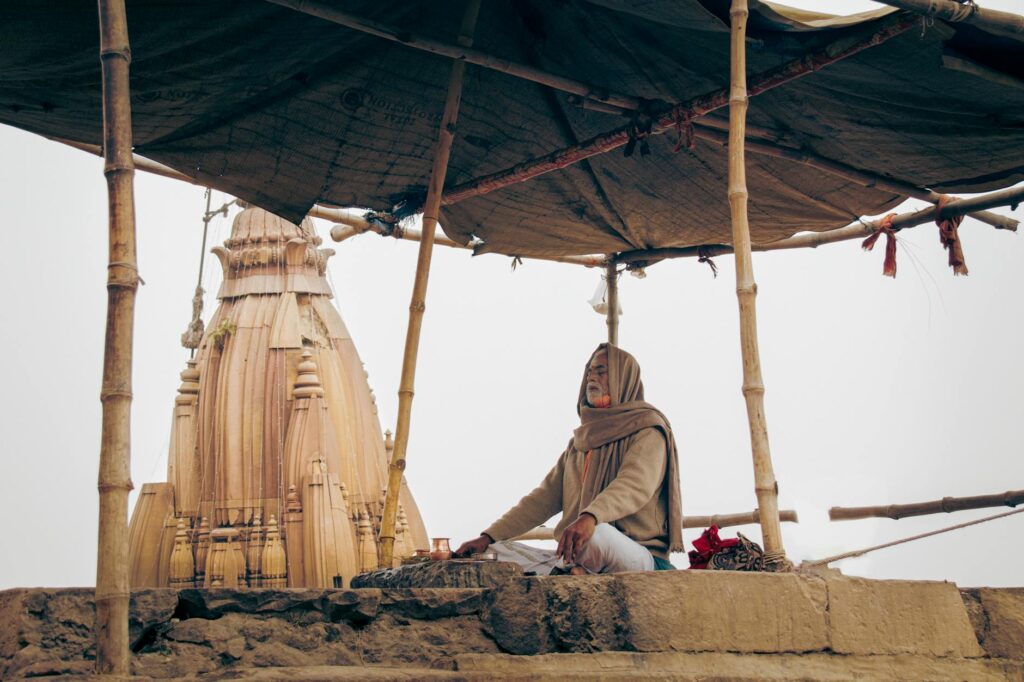
Varanasi – The Eternal City
The Spiritual Significance of Kashi
Varanasi wears many names—Kashi (the City of Light), Banaras (from its historical British name), and Varanasi (its official name)—each revealing different aspects of its identity. But regardless of what you call it, this city holds a unique position in Hindu consciousness. It’s believed to be the earthly home of Lord Shiva, standing on his trident above the material world, making it not just sacred but transcendently so.
The spiritual geography of Varanasi is complex. The city sits on the western bank of the Ganges, considered auspicious as the sun rises from the opposite bank, illuminating the ghats each morning. This orientation isn’t accidental—it’s cosmologically significant, with the river flowing northward here, which Hindus consider especially holy. The city itself is said to be eternal, existing even when the universe dissolves and recreates, making it a permanent fixture in cosmic geography.
For devout Hindus, dying in Varanasi is the ultimate blessing. The belief holds that anyone who dies here achieves moksha—liberation from the cycle of birth and death. This isn’t merely religious theory; it’s a reality that shapes the city’s character. Elderly pilgrims come to spend their final days here, families bring loved ones’ ashes for immersion, and the cremation ghats burn continuously, creating a city where death is neither hidden nor feared but accepted as a sacred transition.
Life Along the Ganges Ghats
The ghats—those stone steps descending to the Ganges—are where Varanasi’s soul reveals itself most vividly. Over eighty ghats line the river, each with its own history, character, and significance. Some are bathing ghats where pilgrims perform ritual ablutions. Others are cremation ghats where the dead receive their final rites. Still others serve as gathering places for sadhus (holy men), venues for ceremonies, or simply spots where life unfolds in all its variety.
Walking along the ghats, especially in early morning or evening, exposes you to an overwhelming sensory experience. The sound of temple bells mingles with devotional chants and the murmur of prayers. The smell of incense combines with flowers, river water, and the distinctive odor of cremation smoke. Visually, the colors dazzle—saffron-clad sadhus, brightly dressed women performing rituals, white-clad widows, and tourists in everything imaginable.
Morning Rituals and Sunrise Boat Rides
If you do only one thing in Varanasi, make it a sunrise boat ride on the Ganges. As dawn breaks, the city awakens in prayer. Thousands descend to the ghats for their morning bath and worship. The early light creates magical conditions—mist often hangs over the water, silhouetting the temples and ghats, while the first rays of sun paint everything in golden hues.
From your boat, you’ll witness the full spectrum of ghat life. Priests conducting private ceremonies for families, individuals standing waist-deep in the river offering prayers to the sun, sadhus performing yoga asanas, children playing, laundry workers washing clothes, and the constant, mesmerizing flow of humanity engaged in rituals that have continued essentially unchanged for millennia.
The boatmen navigate slowly, allowing you to absorb each scene. At Manikarnika Ghat and Harishchandra Ghat, the cremation fires are visible even in morning light—a stark reminder of mortality that somehow feels appropriate rather than morbid in this context. The boat ride isn’t just sightseeing; it’s a meditation on life, death, devotion, and the eternal flow of the river that witnesses it all.
The Evening Ganga Aarti Spectacle
As impressive as mornings are, evenings bring Varanasi’s most spectacular ceremony—the Ganga Aarti at Dashashwamedh Ghat. Every evening, as the sun sets, seven priests dressed in orange robes perform an elaborate worship ritual to the river goddess Ganga. The ceremony involves massive brass lamps (each with multiple tiers holding dozens of wicks), synchronized movements choreographed to devotional music, and the participation of thousands of onlookers.
The aarti begins with the ringing of bells and blowing of conch shells, creating a soundscape that resonates across the river. The priests perform precise movements, raising the heavy lamps and moving them in patterns that create mesmerizing visuals against the darkening sky. Smoke from incense and camphor fills the air, creating a hazy atmosphere that adds to the mystical quality.
What elevates this beyond mere spectacle is the palpable devotion—both from the priests performing the ritual and the crowd witnessing it. People press forward to be closer, many with tears streaming down their faces, hands raised in prayer, completely absorbed in the spiritual moment. Small oil lamps float on the river, their flames flickering as they drift downstream, each carrying someone’s prayer or wish.
Temples and Sacred Spaces
Varanasi claims to have thousands of temples, from grand structures to tiny shrines tucked into corners. The Kashi Vishwanath Temple, dedicated to Shiva, stands as the city’s spiritual center. Its golden spire, visible from various points, serves as a constant reminder of divine presence. The current structure dates to the 18th century, but temples have stood on this site for far longer, making it one of India’s most ancient and revered Shiva shrines.
Non-Hindus cannot enter the main sanctum of Kashi Vishwanath, but the surrounding area buzzes with activity—pilgrims queuing for darshan (viewing the deity), priests conducting ceremonies, vendors selling offerings of flowers and coconuts, and the general organized chaos that characterizes major Hindu temples. Even observing from outside provides insights into Hindu worship practices and devotional intensity.
The Sankat Mochan Hanuman Temple draws devotees of Hanuman, the monkey god symbolizing devotion and service. Established by the poet-saint Tulsidas, who composed the Hindi version of Ramayana, this temple has a more accessible atmosphere than Kashi Vishwanath. The Durga Temple, often called the Monkey Temple for the numerous monkeys inhabiting it, and the Tulsi Manas Temple with its walls inscribed with verses from Ramayana, add to the city’s sacred landscape.
Beyond major temples, Varanasi’s spiritual geography includes countless small shrines, sacred trees wrapped in prayer threads, and spots believed to have mythological significance. Walking the lanes of the old city, you’re never far from some expression of the sacred.
The Art of Dying in Varanasi
Confronting death is unavoidable in Varanasi, and this confrontation offers profound insights into Hindu philosophy and the human condition. At Manikarnika Ghat and Harishchandra Ghat, cremations occur twenty-four hours a day, every day of the year. The fires never die, symbolizing the eternal nature of the soul even as bodies return to the elements.
Watching cremations (from a respectful distance—photography is absolutely forbidden and offensive) can be unsettling for those from cultures that hide death away. But there’s also something powerful about this openness. Death isn’t sanitized or denied but acknowledged as natural, even as a moment of transformation and potential liberation. Families accompany their loved ones to the pyre, perform the rituals, and witness the cremation, participating directly in this final transition.
The Dom Raja, the chief of the cremation ground workers, holds a position that’s simultaneously low-caste and spiritually significant. The doms maintain the sacred fire and conduct the practical aspects of cremation, performing a role others won’t but that’s essential to the city’s spiritual function. This paradox—polluting work that’s simultaneously sacred—reflects Hinduism’s complex relationship with purity, pollution, and spiritual significance.
Cultural Arts: Music, Silk, and Literature
Varanasi’s cultural contributions extend beyond spirituality. The city has nurtured Hindustani classical music for centuries, producing legendary musicians and maintaining vital traditions. The Sankat Mochan Music Festival, held annually, brings together classical musicians for days of performances. Even outside formal festivals, you might encounter impromptu music at ghats or temples—a tabla player and vocalist immersed in practice, creating ethereal sounds that blend with the river’s flow.
Banarasi silk weaving represents another cultural treasure. The intricate brocade work, featuring gold and silver threads woven into silk, has adorned royalty and brides for generations. Visiting weaver colonies reveals the painstaking process—weavers working on traditional handlooms in cramped workshops, creating textiles that take weeks or months to complete. The industry faces challenges from power looms and declining interest among younger generations, making support for authentic handloom weavers increasingly important.
Varanasi also boasts literary heritage. Many Sanskrit scholars and Hindi writers have called it home. The Banaras Hindu University, with its Sanskrit studies and traditional learning combined with modern education, continues this intellectual tradition. The city’s character has inspired countless poems, songs, and stories attempting to capture its ineffable quality—that mixture of beauty and decay, spirituality and worldliness, eternity and impermanence.
Ayodhya – The City of Lord Ram
Mythological Significance and the Ramayana
From Varanasi’s confrontation with mortality, our journey takes us to Ayodhya, where mythology becomes living faith. According to the Ramayana—one of Hinduism’s two great epics—Ayodhya was the capital of the Kosala kingdom and the birthplace of Lord Ram, the seventh avatar of Vishnu. For devout Hindus, this isn’t ancient history but sacred truth, making Ayodhya one of Hinduism’s seven holiest cities.
The Ramayana’s narrative—Ram’s birth, his fourteen-year exile, his wife Sita’s abduction by the demon king Ravana, the war to rescue her, and their eventual return to Ayodhya—has shaped Indian culture profoundly. The epic isn’t just a story but a teaching text about dharma (righteous conduct), family relationships, devotion, and ideal kingship. Ram himself represents the perfect man—dutiful son, devoted husband, just ruler—making him arguably Hinduism’s most beloved deity.
Walking through Ayodhya, you’re walking through this mythological geography made physical. This is where Ram was born, where he grew up, where he was crowned king upon his return. Every site connects to specific episodes from the epic, creating a landscape where mythology and geography merge completely.
The Ram Mandir: A New Chapter
The Ram Mandir (Ram Temple), inaugurated in January 2024, represents a new chapter in Ayodhya’s long history. After decades of controversy and anticipation, this grand temple dedicated to Ram now stands at the site believers identify as his birthplace. The temple’s architecture draws from traditional Nagara style, with intricate carvings depicting scenes from Ramayana covering its surfaces.
Visiting the Ram Mandir requires patience, especially during peak pilgrimage times, as crowds can be substantial. Security is thorough, and you’ll queue for darshan of the Ram Lalla (infant Ram) idol in the sanctum. Despite the crowds, the moment you enter the main temple and approach the sanctum creates a powerful emotional impact. The devotion visible on pilgrims’ faces—tears, overwhelmed expressions, hands folded in prayer—reveals how deeply Ram worship touches Hindu consciousness.
The temple complex itself is beautifully maintained, with surrounding areas undergoing extensive development to accommodate the millions of pilgrims expected annually. While some mourn the displacement of the old city’s character, others see this development as appropriate honor for such a sacred site.
Temples and Pilgrimage Sites
Hanuman Garhi and Kanak Bhawan
Beyond the Ram Mandir, Ayodhya hosts numerous other significant temples. Hanuman Garhi, a fortress-like temple dedicated to Hanuman (Ram’s devoted follower), sits atop a hill accessible via seventy-six steps. This is one of India’s most important Hanuman temples, with beliefs that all wishes made here with pure heart are fulfilled. The temple remains crowded with devotees who chant “Jai Shri Ram” continuously, creating an atmosphere of intense devotional energy.
Kanak Bhawan, meaning “Golden Palace,” is dedicated to Ram and Sita together. According to tradition, this was gifted to Sita by Ram’s stepmother Kaikeyi after their marriage. The temple houses beautiful idols adorned with gold crowns and elaborate clothing, and the intricate artwork covering walls depicts various Ramayana scenes. The temple’s peaceful atmosphere contrasts with some of Ayodhya’s more crowded sites, making it ideal for contemplative visits.
Other significant temples include Nageshwarnath Temple (dedicated to Shiva, said to be established by Ram’s son Kush), Treta Ke Thakur (marking the spot where Ram performed the Ashwamedha sacrifice), and numerous smaller shrines and ashrams scattered throughout the city. Each contributes to the comprehensive Ramayana geography that makes Ayodhya unique.
The Sarayu River and Its Ghats
The Sarayu River flows through Ayodhya, adding geographical and spiritual significance to the city. While less famous than the Ganges, the Sarayu holds immense importance in Hindu tradition—bathing in it is believed to grant purification and merit. The riverbank features several ghats where pilgrims perform rituals, offer prayers, and take holy dips.
Ram Ki Paidi represents the main ghat complex, with steps descending to the river. During festivals, particularly Ram Navami (celebrating Ram’s birth), these ghats transform with thousands of devotees, elaborate decorations, and continuous ceremonies. Even on regular days, the ghats maintain spiritual activity—morning prayers, evening aarti, and the quiet devotion of individual pilgrims.
The evening aarti on the Sarayu, while smaller in scale than Varanasi’s Ganga Aarti, creates its own beautiful atmosphere. Oil lamps float downstream, devotional songs fill the air, and the gathering darkness adds mystical quality to the proceedings. The Sarayu aarti feels more intimate, less performed-for-tourists, offering authentic glimpses into Hindu ritual practice.
Experiencing Devotional Culture
What distinguishes Ayodhya is the pervasive atmosphere of Ram bhakti (Ram devotion). The city doesn’t just commemorate Ram; it breathes him. “Jai Shri Ram” (Victory to Ram) serves as standard greeting, shop signs invoke his name, and you’ll hear Ramayana verses being recited in temples, shops, and streets. This isn’t put on for visitors—it’s how Ayodhya exists, as a city defined entirely by devotion to its divine son.
Attending bhajan (devotional song) sessions at temples or ashrams provides deeper insights into this devotional culture. The repetitive chanting, call-and-response singing, and communal participation create states of religious ecstasy where the boundary between worshipper and worshipped seems to dissolve. Even if you don’t understand the words or share the faith, the emotional power of collective devotion communicates universally.
Ayodhya challenges secular assumptions about religion as merely personal belief. Here, faith structures every aspect of existence—economic, social, political, spatial. Understanding Ayodhya means understanding how religion can be not just part of life but life’s organizing principle.
Prayagraj – Where Rivers Converge
The Sacred Triveni Sangam
Our cultural journey’s final destination is Prayagraj (historically Allahabad), where rivers converge in what Hindus consider one of the holiest sites on Earth. The Triveni Sangam—the confluence of the Ganges, Yamuna, and the mythical Saraswati—is believed to be a point where bathing washes away sins and grants spiritual merit. This isn’t merely symbolic; for devout Hindus, the Sangam possesses actual purifying power.
Taking a boat to the Sangam reveals the physical reality underlying the sacred geography. You can see where the muddy brown Ganges meets the slightly clearer Yamuna, creating a visible line where the waters merge before flowing together toward the Bay of Bengal. The mythical Saraswati, said to flow underground, completes the sacred triad representing knowledge, devotion, and power.
The Sangam area buzzes with activity—boats ferrying pilgrims back and forth, priests conducting ceremonies on floating platforms, vendors selling offerings, and the constant stream of people taking their holy bath. Watching pilgrims immerse themselves, some with complete family groups including elderly members and small children, reveals faith’s power to override practical concerns. The water isn’t pristine, the currents can be strong, but belief overrides such considerations.
Kumbh Mela: The Greatest Show on Earth
Every twelve years, Prayagraj hosts the Maha Kumbh Mela, transforming into the site of the world’s largest human gathering. The 2019 Ardh Kumbh (occurring every six years) saw over 150 million visitors across its fifty-day duration. The 2025 Maha Kumbh is projected to be even larger, potentially making it the biggest peaceful assembly in human history.
The Kumbh revolves around astronomical calculations determining auspicious bathing dates. On these dates, particularly the Shahi Snan (royal baths), millions gather at the Sangam for simultaneous ritual immersion. The logistics are staggering—a temporary city springs up with organized sectors, pontoon bridges, hospitals, police stations, and complete infrastructure supporting this population explosion.
Beyond the ritual bathing, Kumbh becomes a massive cultural and spiritual fair. Sadhus from remote Himalayan caves and forests emerge for their rare public appearances. The Naga Sadhus, completely naked and covered in ash, lead processions to the bathing ghats in spectacular displays. Spiritual discourses by renowned teachers occur continuously. Cultural performances showcase India’s diverse traditions. And millions of ordinary pilgrims fulfill their spiritual aspirations through this extraordinary gathering.
Experiencing Kumbh requires planning and endurance—crowds are intense, facilities basic, weather can be challenging (January-February can be quite cold). Yet the scale and atmosphere create something beyond ordinary experience—a glimpse into faith’s power to mobilize millions toward common spiritual purpose.
Historical Monuments and Colonial Legacy
Allahabad Fort and Akbar’s Legacy
Beyond its spiritual significance, Prayagraj possesses historical importance reflected in its monuments. The Allahabad Fort, built by Mughal Emperor Akbar in 1583, stands as one of the largest forts constructed by the Mughals. Much remains under Indian Army control and isn’t accessible, but portions open to visitors contain remarkable features.
Inside the fort complex, you’ll find the Patalpuri Temple and the Akshaya Vat (immortal banyan tree), said to be undying and possessing great spiritual significance. The fort also houses the famous Ashoka Pillar, originally erected elsewhere by Emperor Ashoka in the 3rd century BCE and later moved here. The pillar bears inscriptions from Ashoka’s time, making it one of India’s most ancient historical artifacts. The inscription’s message—pro
moting dharma and ethical governance—remains remarkably relevant millennia later.
The fort’s massive walls and strategic position overlooking the confluence testify to Prayagraj’s importance throughout history. Akbar recognized the city’s spiritual significance and built accordingly, creating structures meant to last centuries.
Anand Bhavan and the Freedom Struggle
Prayagraj played a crucial role in India’s independence movement, and Anand Bhavan—the ancestral home of the Nehru family—preserves this history. This beautiful colonial-era mansion has been converted into a museum chronicling the freedom struggle through personal belongings, photographs, and documents of Jawaharlal Nehru (India’s first Prime Minister), his father Motilal Nehru, and other family members.
Walking through Anand Bhavan’s preserved rooms creates tangible connections to history. This is where crucial decisions about India’s freedom movement were made, where leaders met to strategize, where personal sacrifices for national goals were decided. The adjacent Swaraj Bhavan served as Congress Party headquarters during crucial years, making this complex central to independence struggle history.
The museum illustrates how Prayagraj bridged tradition and modernity—a city sacred to ancient tradition that simultaneously nurtured modern nationalist politics. This duality—deeply rooted in spiritual tradition while embracing progressive political ideas—characterizes Prayagraj’s unique identity.
Literary and Educational Heritage
Prayagraj has long been a center of learning and literature. Allahabad University, established in 1887, counts among India’s oldest universities and has produced distinguished alumni including several Prime Ministers and renowned writers. The Gothic and Indo-Saracenic architecture of the university campus deserves exploration for its aesthetic and historical value.
The city’s association with Hindi literature is profound. The poet Harivansh Rai Bachchan (father of Bollywood actor Amitabh Bachchan) lived here, and numerous other writers and poets have called Prayagraj home. The city continues hosting important literary events, maintaining traditions of intellectual and cultural discourse alongside its spiritual identity.
This combination—spiritual pilgrimage site and educational center, ancient sacred geography and colonial-era institutions—makes Prayagraj fascinating as a case study in how Indian cities balance multiple identities simultaneously.
Cultural Threads Connecting Three Cities
The Ganges as Cultural Lifeline
One river connects all three cities—the Ganges, or Ganga as she’s reverently called in Hindu tradition. More than geographical feature, the Ganges functions as cultural lifeline, spiritual cleanser, and divine presence. Understanding attitudes toward the river helps unlock these cities’ cultural significance.
In Hindu tradition, the Ganges isn’t simply water but the goddess Ganga descended to Earth. Bathing in her waters purifies spiritually, drinking it brings blessings, and dying near it grants favorable rebirth or liberation. This isn’t metaphor but literal belief shaping millions of lives. The river’s physical presence—its flow, its life-giving properties, its role in agriculture and daily life—merges completely with its spiritual significance.
The pollution challenges facing the Ganges add poignant contemporary dimensions to this ancient relationship. Seeing devotion to a river that’s environmentally compromised creates complex feelings. Yet the devotion continues, perhaps testimony to faith’s power to transcend material conditions, or perhaps tragic evidence of how sacred beliefs can’t alone protect what they revere.
Hindu Philosophy and Practice
These three cities collectively illustrate core Hindu philosophical concepts. Varanasi embodies the cycle of birth, death, and rebirth (samsara) and the goal of liberation (moksha). The cremation ghats make impermanence (anitya) viscerally real—everything changes, nothing lasts, the body returns to elements while the soul continues its journey.
Ayodhya represents dharma—righteous living according to cosmic order. Ram’s story teaches duty to family, kingdom, and moral principles even when they require personal sacrifice. The city’s devotional atmosphere illustrates bhakti (devotion) as a spiritual path—loving surrender to the divine as means to transcendence.
Prayagraj demonstrates the importance of sacred geography and pilgrimage. The belief that specific places hold spiritual power, that bathing at particular confluences grants specific benefits, reveals Hindu tradition’s integration of the physical and spiritual. Geography isn’t merely neutral space but can be charged with sacred significance.
Festivals and Celebrations
The festival calendar connects these cities. Maha Shivaratri (the great night of Shiva) transforms Varanasi with special ceremonies at Kashi Vishwanath and other Shiva temples. Ram Navami (Ram’s birthday) makes Ayodhya the celebration’s epicenter, with elaborate ceremonies and massive pilgrim influxes. The Kumbh transforms Prayagraj into pilgrimage destination for the world’s largest religious gathering.
Dev Deepawali in Varanasi, with millions of lamps illuminating the ghats, creates one of India’s most beautiful festival scenes. Diwali celebrations across all three cities connect to different mythological events—Ram’s return to Ayodhya, Lakshmi worship, victory of light over darkness—but share common themes of illumination, renewal, and triumph of good over evil.
Participating in festivals in these cities isn’t just witnessing celebrations but experiencing how religion structures time itself, creating rhythms and cycles that give meaning to the passage of days, seasons, and years.
Practical Cultural Immersion
Suggested 6-8 Day Itinerary
Days 1-3: Varanasi
- Day 1: Arrive, evening orientation walk through old city lanes, witness Ganga Aarti at Dashashwamedh Ghat
- Day 2: Sunrise boat ride on Ganges, visit Kashi Vishwanath Temple area, explore Banarasi silk weaving workshops, evening free time or music performance
- Day 3: Day trip to Sarnath (Buddhist heritage), afternoon visit to Banaras Hindu University campus, evening at Assi Ghat for sunset
Days 4-5: Ayodhya
- Day 4: Travel to Ayodhya (200 km, 4-5 hours), afternoon visit Ram Mandir and Hanuman Garhi, evening aarti at Sarayu River
- Day 5: Morning visit to Kanak Bhawan and other temples, explore the city’s devotional atmosphere, afternoon travel to Prayagraj (165 km, 3-4 hours)
Days 6-7: Prayagraj
- Day 6: Morning boat trip to Triveni Sangam, visit Allahabad Fort and Akshaya Vat, afternoon at Anand Bhavan museum
- Day 7: Explore Allahabad University campus, visit Khusro Bagh, free time for final experiences
Day 8: Departure
- Morning as needed, depart from Prayagraj
This itinerary balances structured sightseeing with free time for organic experiences. Adjust based on interests—add a day in Varanasi for deeper immersion, time your visit for specific festivals, or extend in Prayagraj if visiting during Magh Mela or Kumbh.
Transportation Between Cities
These cities are well-connected, making travel logistics straightforward. Varanasi to Ayodhya covers approximately 200 kilometers, achievable via train (3-4 hours) or car hire (4-5 hours). Ayodhya to Prayagraj spans about 165 kilometers, again manageable by train or car in 3-4 hours.
Many travelers hire a car with driver for this circuit, offering flexibility and comfort. The cost becomes reasonable when split among multiple travelers, and good roads make drives pleasant. You can stop at interesting points along the route and avoid train schedule constraints.
Within cities, auto-rickshaws, cycle-rickshaws, and app-based cabs handle local transportation. Varanasi’s old city areas near the ghats are best explored on foot, as narrow lanes don’t accommodate vehicles. Ayodhya and Prayagraj are more spread out, making vehicles necessary for moving between sites.
Best Times for Cultural Experiences
October through March offers pleasant weather and includes major festivals. November brings Dev Deepawali in Varanasi and Chhath Puja celebrations. March-April features Ram Navami in Ayodhya. January-February sees Magh Mela in Prayagraj, and during Kumbh years, this becomes the Kumbh Mela experience.
Winter months (December-February) provide comfortable temperatures for exploration but can be quite cold in early mornings and evenings, particularly near the rivers. Pack warm layers if visiting during this period.
Summer (April-June) brings intense heat, often exceeding 40°C, making outdoor exploration exhausting. Monsoon season (July-September) brings humidity and rain but fewer tourists and lower accommodation rates. The rivers run higher during monsoon, and the rain-washed landscape photographs beautifully, though weather remains unpredictable.
Where to Stay for Authentic Experiences
Varanasi offers the widest accommodation range. Staying near the ghats—particularly the Assi Ghat area—provides atmospheric experiences and easy access to river activities, though these areas can be noisy and crowded. Hotels with Ganges views command premium prices but offer unique perspectives. The Cantonment area provides quieter, more modern hotels if you prefer conventional comfort.
Ayodhya’s accommodation is developing rapidly post-Ram Mandir inauguration. New hotels are opening, but during peak pilgrimage times, booking well in advance is essential. Many hotels cater specifically to pilgrims, offering simple, clean rooms and pure vegetarian food.
Prayagraj has hotels ranging from budget to mid-range options near the railway station and in the Civil Lines area. During Kumbh years, temporary tent accommodations spring up, offering unique camping experiences along the Ganges, though with basic facilities.
Consider heritage properties or homestays where available, as these often provide more cultural immersion than standard hotels. Hosts can offer local insights, home-cooked meals, and authentic glimpses into daily life.
Cultural Etiquette and Mindful Travel
Traveling through these sacred cities requires sensitivity and respect. These aren’t theme parks but living religious centers where millions conduct sincere spiritual practices. Your presence as visitor carries responsibilities.
Dress modestly—cover shoulders and knees, avoid tight or revealing clothing. This shows respect and helps you blend in better.
Photography requires sensitivity. Never photograph cremations at Varanasi’s ghats—this is absolutely forbidden and deeply offensive. Ask permission before photographing people, especially those engaged in worship or ritual. Some temples prohibit photography entirely; respect these rules.
Remove shoes when entering temples and sometimes when entering certain ghat areas. Watch where others remove theirs.
Maintain quiet demeanor at religious sites. These are active worship spaces, not tourist attractions. Loud conversation, laughter, or disruptive behavior disrespects those praying.
Accept offerings graciously. If priests offer prasad (sanctified food) or tilak (mark on forehead), accept respectfully even if you don’t plan to consume the food. Refusal can offend.
Support local artisans** through conscious purchasing. When buying silk, embroidery, or crafts, seek authentic artisans rather than cheap imitations. Pay fair prices that reflect skilled labor.
Be patient with crowds and chaos. These cities can be overwhelming—crowded, noisy, and intense. The cultural experiences justify the challenges, but realistic expectations help.
Conclusion
The journey through Varanasi, Ayodhya, and Prayagraj offers cultural immersion of extraordinary depth. You’re not simply touring historical sites but entering sacred geography where mythology, devotion, and daily life merge completely. These cities don’t separate the sacred from the secular, the ancient from the modern, or the spiritual from the material—everything exists in dynamic, sometimes chaotic integration.
Varanasi confronts you with life’s ultimate questions, making mortality and transcendence viscerally real through its unflinching embrace of death and spiritual aspiration. Ayodhya connects you to India’s mythological imagination, showing how epic narratives shape contemporary devotion and identity. Prayagraj demonstrates sacred geography’s power, where rivers converging become cosmic events attracting millions seeking spiritual transformation.
What makes this cultural experience profound is its authenticity. You’re not witnessing recreations or museum exhibits but participating in living traditions. The rituals, festivals, crafts, and devotional practices continue because they matter to people, not because tourism demands them. This vitality—this continuity with millennia of tradition while adapting to contemporary realities—makes cultural tourism here feel meaningful rather than superficial.
You’ll return changed, carrying not just photographs but experiences that challenge assumptions and expand perspectives. You’ll have witnessed faith’s power to structure entire cities, seen how millions find meaning through ancient rituals, tasted foods perfected over centuries, and perhaps glimpsed something eternal in the midst of everyday chaos. In our homogenized, globalized world, such experiences become increasingly rare and valuable—encounters with genuine cultural difference that enriches rather than merely entertains.
FAQs
1. How many days do I need to properly experience these three cities?
A minimum of 6-8 days allows meaningful exploration without excessive rushing. Allocate 2-3 days for Varanasi to experience sunrise boat rides, evening aarti, temples, and perhaps a day trip to Sarnath. Ayodhya needs 1-2 days for the Ram Mandir and other temples. Prayagraj deserves 2 days for the Sangam, fort, and museums. If your visit coincides with festivals (Dev Deepawali, Ram Navami, or Kumbh), add extra days. Quality over quantity matters—better to experience fewer places deeply than rush superficially through many.
2. Is it safe for solo female travelers?
Yes, though standard precautions apply. These cities see numerous female pilgrims traveling solo or in groups, so women travelers aren’t unusual. Dress modestly (covering shoulders and knees), avoid isolated areas after dark, and be firm with touts and overly helpful strangers. Varanasi’s ghat areas near Assi can be safer for women than the more crowded Dashashwamedh area. Book accommodations in reputable hotels or guesthouses with good reviews. Most locals are helpful and respectful, particularly in these religious cities where codes of conduct are taken seriously. Trust your instincts, and don’t hesitate to firmly decline unwanted attention.
3. Can non-Hindus visit temples and participate in rituals?
Most temples welcome all visitors regardless of religion, though some (like Kashi Vishwanath’s inner sanctum) restrict entry to Hindus only. Even when you cannot enter the sanctum, you can usually observe from outer areas. Respectful observance is always welcome—you needn’t believe to appreciate cultural and spiritual practices. Participating in rituals like aarti is generally welcomed; priests may offer tilak or prasad regardless of your religion. Approach with openness and respect rather than skepticism or mockery, and you’ll find these experiences enriching. If uncertain about specific protocols, observe others or politely ask locals or temple staff.
4. What’s the best way to handle aggressive vendors and touts?
Tourist areas in these cities can have aggressive vendors and touts. Firm but polite refusal works best—a clear “no thank you” while continuing to walk. Avoid engaging in conversation if you’re not interested, as this often encourages persistence. Don’t feel pressured to accept services you didn’t request, like unsolicited “guides” at ghats. For legitimate services (boat rides, guides, transportation), negotiate prices beforehand and be willing to walk away if prices seem unreasonable. Having a local guide or arranging services through your hotel reduces random approaches. Remember that many vendors are simply trying to earn a living, so while firmness is necessary, rudeness isn’t.
5. How should I dress for bathing or participating in river rituals?
If you wish to bathe in the Ganges at Varanasi or Sangam at Prayagraj, wear modest clothing—lightweight cotton clothes that cover your body (not swimwear). Men typically wear shorts or dhoti-like wraps; women wear salwar-kameez or long tunics with leggings that can get wet. Many pilgrims bathe fully clothed, then change afterward. Bring a towel and dry clothes in a waterproof bag. Some hotels near ghats offer changing facilities. You can also simply wade in for ankle-deep immersion rather than full bathing. Local vendors sell appropriate bathing clothes if you didn’t bring suitable items. Remember that these are religious rituals, not beach activities, so modest dress and respectful behavior are essential.